
From Forces of Destiny by Christopher Bollas pg 37-38:
And now and then we will be quite transformed by the uncanny wedding of our idiom and an object meeting up at just the right time. One late afternoon in the summer of 1972, I heard a performance of one of Hindmith’s viola sonata in a small church in New England. It immediately served to process a feature of my idiom, and this occasion sponsored vivid and intense feelings and ideas which lifted me into the next moments of my life. Shall we ever have the means to analyse that? Why that particular work?
There are four aspects of this which I think it’s important to untangle:
- “the uncanny wedding of our idiom and an object”
- the timing of their meeting
- the experiences which are produced
- the capacity of those experiences to move us forward in our becoming who we are
The most powerful experiences of cultural objects come when these four aspects are in alignment. I stumbled across T.S. Eliot’s Four Quartets at a particularly bleak time in my life and there was something I dimly perceived in my existence (“not known, because not looked for but heard, half-heard, in the stillness…”) which I could see more acutely after reading Little Gidding for the first time. That each moment could somehow be a home if only I could relate to it with sufficient care. That some moments bring higher, fuller experiences which I needed to be more disciplined in order to be able to receive. To see it made made it an object of reflection and exploration. It enabled me to elaborate myself in relation to it and find other objects to help me explore it. There was something latent in how I was trying to make sense of my existence (my idiom) which suddenly found expression through my engagement with the poem (my object). But that meeting came at a critical juncture, a ‘fateful moment’ to use the lingo of biographical sociology, which meant that it me on a new course.
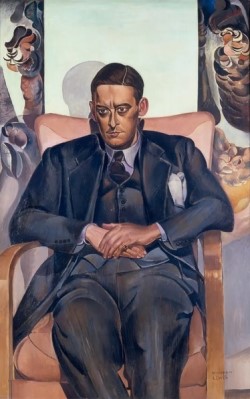
Wyndham Lewis – Portrait of T. S. Eliot
I wonder however what a mundane sociology of these experiences would look like. One attuned to the scaffolding which makes such meetings possible. In my case I’d spent the previous year circling round Rilke with a sense I saw something in there which couldn’t reach in the same way. Or the blogging through which I tried to identify self-states which could be imbued with some reality by sharing with the Big Other before they came to elaborated in a way that felt coherent to me. Or even the whole problematic of presence underpinning how I received Little Gidding which rested on a whole gamut of therapeutic, spiritual and philosophical sources in a melange I don’t think I’d realised until now I’d been constructing for many years. The idiom has to be saturated with latent meaning that can burst out into a new expression at a moment of experienced fullness. It’s not created by the new object but rather facilitated by it.
You can’t choose cultural objects to solve a problem. Indeed if you’re relating to these objects to do something it will almost certainly blunt the possibility of resonance. There’s a subtle dialectic here in which a movement takes a more definitive form through these fateful encounters rather than being created by them. There’s a risk that, much as with explaining the lived life, we miss the subtle grounds for transformation if we get too preoccupied with the observable transformation itself. There was a grammar which pre-existed it within and through which change became possible. That’s where sociology can contribute something meaningful to the psychoanalysis of personal change through cultural objects.
 Mark Carrigan