
Raiding the inarticulate since 2010

accelerated academy acceleration agency AI Algorithmic Authoritarianism and Digital Repression archer Archive Archiving artificial intelligence automation Becoming Who We Are Between Post-Capitalism and Techno-Fascism big data blogging capitalism ChatGPT claude Cognitive Triage: Practice, Culture and Strategies Communicative Escalation and Cultural Abundance: How Do We Cope? Corporate Culture, Elites and Their Self-Understandings craft creativity critical realism data science Defensive Elites desire Digital Capitalism and Digital Social Science Digital Distraction, Personal Agency and The Reflexive Imperative Digital Elections, Party Politics and Diplomacy digital elites Digital Inequalities Digital Social Science Digital Sociology digital sociology Digital Universities elites Fragile Movements and Their Politics Cultures generative AI higher education Interested labour Lacan Listening LLMs margaret archer Organising personal morphogenesis Philosophy of Technology platform capitalism platforms populism Post-Democracy, Depoliticisation and Technocracy post-truth psychoanalysis public engagement public sociology publishing Reading realism reflexivity scholarship Shadow Mobilization, Astroturfing and Manipulation Social Media Social Media for Academics social media for academics social ontology social theory sociology technology The Content Ecosystem The Intensification of Work The Political Economy of Digital Capitalism The Technological History of Digital Capitalism Thinking trump twitter Uncategorized work writing zizek

The OU Framework for the Learning and Teaching of Critical AI Literacy Skills

I found this a really helpful approach from the Open University. Firstly, identify the elements of critical digital literacy the institution wants staff and students to cultivate:
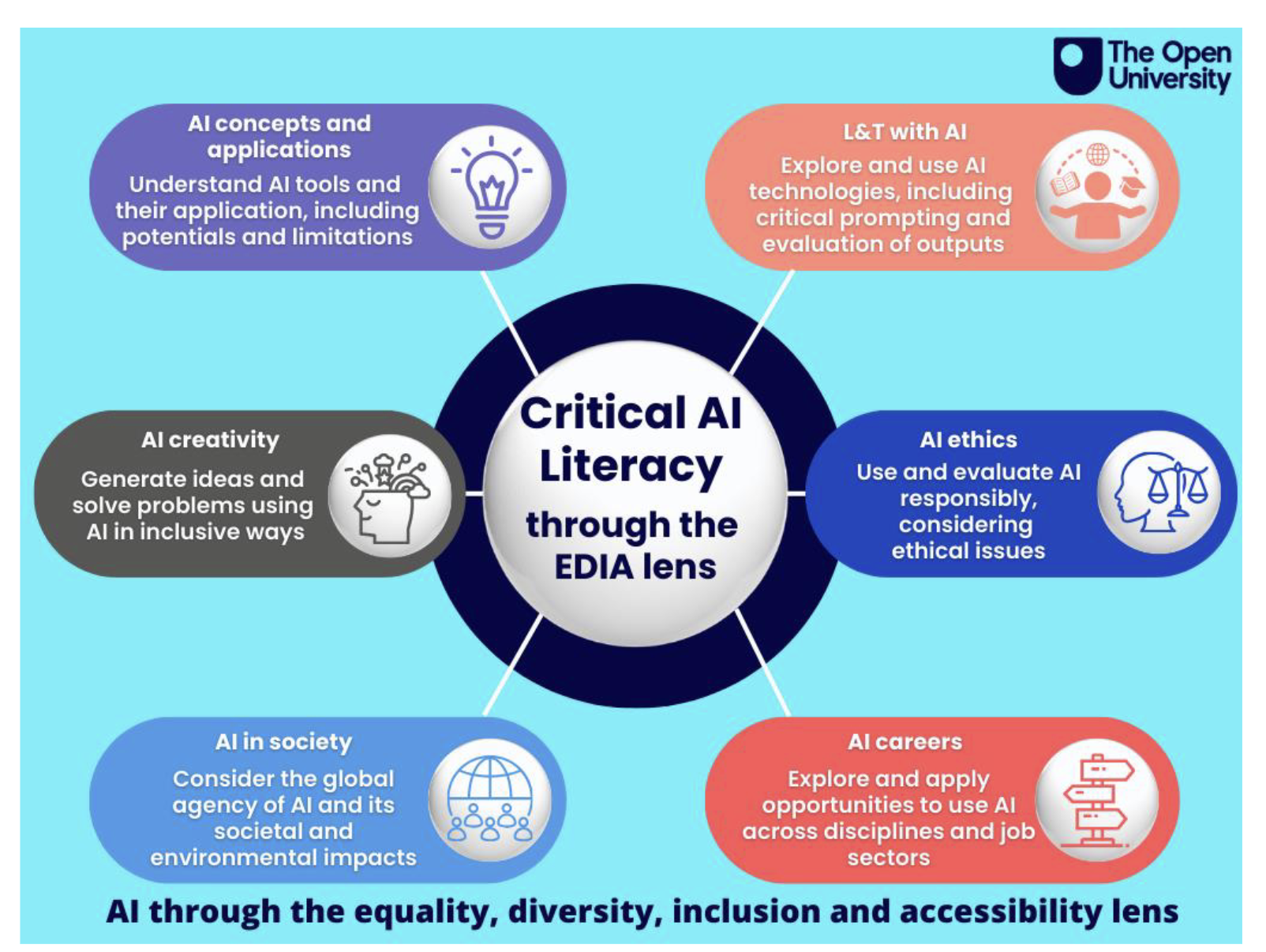
Then offer staff a practical list of the actions associated with each of the elements, such as those listed for AI ethics in the report:

  • Use key criteria to evaluate AI tools (e.g. functionality, accessibility, privacy,
    security, copyright).
  • Engage with ethical issues related to AI, such as bias, deepfakes, copyright
    infringement, data security and privacy, with a focus on AI- based creativity.
  • Consciously take account of ethical issues by acting in a way that promotes responsible use of AI, e.g. asking for consent before using personal data,
    refraining from spreading misinformation.

I think this is how you integrate programme development and staff development. The criteria can provide ILOs which can be incorporated into programme development (i.e. what does ’embedding critical AI literacy’ into teaching actually mean?) while also providing workable objectives for staff development.