
I worry that university leadership in the UK has not adequately registered the factors which are driving generational hostility to AI. These findings reported in the Financial Times show how rapidly attitudes are developing amongst those born between 1997 and 2012 in the US.
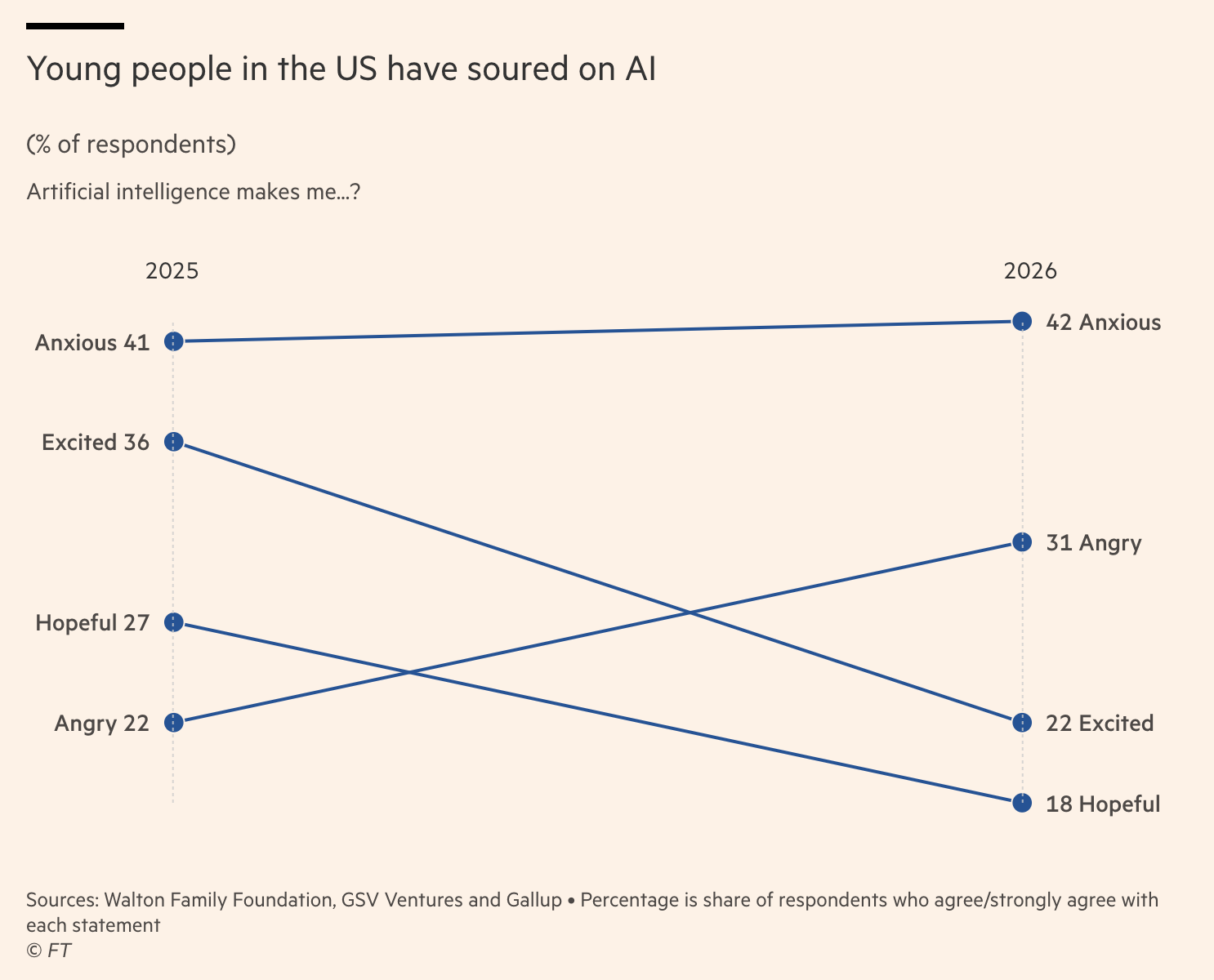
This is changing the experience of job hunting in a way that understandably creates anxiety and anger:
For many graduates, AI has turned job hunting into an arms race. Applicants use chatbots to generate ever more applications while employers deploy algorithms to sift through the deluge, and candidates find themselves navigating multiple rounds of automated interviews and assessments before ever speaking to a human. A recent study led by researchers from Stanford University found that on one popular “gamified” assessment platform, jobseekers would need to apply for at least 25 different positions to be almost certain of receiving at least one recommendation to proceed to the next stage of an application. Many graduates have described applying to hundreds of positions without having a single job offer.
These effects of diffusion are only going to grow, as language models become normalised across all sectors. If we add to this the macro-political and economic factors (climate crisis, automation, power of big tech etc) then we have a potent recipe for hostility to AI being a defining attribute of a significant minority, if not a small majority, of young people.
This means the imagined benefit of AI-integration for recruitment and retention is not straight forward. It also means that this group have to be engaged with in serious and fair ways within institutions which have committed to prioritise AI. A boosterish mentality under these circumstances carries a tacit message that the students are wrong to be worried about their occupational futures. That risks being actively insulting in a way that further polarises an already polarised set of issues.

