
Almost a decade ago I wrote about how the service IFTTT (similar to Zapier) posed profound questions about technological reflexivity, through the capacity it opened up to organise your own information environment. It enables different services to be connected through simple logical statements: if X (event in one app) then Y (action in another app). I mostly used it for automating content curation and posting at a time when I was responsible for a terrifyingly large array of social media feeds. But I was conscious of the broader challenge this posed in terms of optimisation: if you had a clear understanding of your cross-platform workflow then this service offered some profound opportunities to eliminate needless busy work from your life. In essence it was a device for automation, albeit of a relatively primitive sort.
It failed to take off in academia in any discernible way, even within digital scholarship and digital education communities. I always found this curious insofar as it suggested to me something more than a simple absence of time to explore the vast array of affordances which platform capitalism offered to us. I suspect the problem was a lack of a clearly defined workflow for many academics who instead muddle through in situationally dependent ways, reflecting differences of context (e.g. home, office, travelling) or time of year (e.g. teaching term, summer vacation, sabbatical). The lack of what I’d call technological reflexivity, the capacity to reflect on what you do with technology and why in ways which support doing it differently, makes it extremely difficult to take advantage of the possibilities of automation.
However the paradoxical flip side of this is the propensity for academics to feel stressed, overwhelmed with paper work and unable to keep up with spiralling communicative demands. In pointing this out I am not denying the structural causes of these problems; in fact I think it’s difficult to understand the problems qua problems without appreciating the particular ways in which they manifest themselves, in different ways for different people at different times. But it strikes me that the possibilities of automation (as well as technological reflexivity more broadly) can be seen as a form of self-defence under these circumstances. The problem is that it’s difficult to know how to implement them when time is scarce and we lack a clear understanding of what it is we actually do in the most mundane sense.
These underlying problems will likely get worse. I’m concerned that the rush towards automation in cash strapped universities (whether objectively so or simply in the subjective experience of senior leadership) will lead to spiralling demands of busywork, as the organisation is forced to restructure itself in order to make it legible to automated systems. Under these conditions, there is a digital divide issue which opens up concerning those staff who have the means to minimise the bureaucratic load (intersecting with existing forms of status and power) and those who do not.
The reason I’m thinking about this is because there will soon be forms of personalised automation freely available to those with the inclination to adopt them which will have radical consequences for how long ‘getting things done’ takes. I’ve been experimenting with the beta of Zapier’s ChatGPT integration and it opens up some remarkable possibilities:
- Having draft responses waiting for you in your inbox, simply to be scanned and modulated
- Performing continual literature reviews, leaving summaries/links sitting in a table in a Notion workspace
- Summarising documents within a folder in terms of given themes/categories
- Preparing a slide deck based on a range of documents within a folder
None of this works yet. The integration is in beta and it’s extremely slow. The range of actions facilitated by the API are relatively limited for now. It remains to be seen whether OpenAI will facilitate this level of access or if Zapier will continue to make it part of the free account once it moves into a full release. It’s possible this won’t happen at all because there’s no way to make it economical. Or if it does it will be prohibitively expensive to use at a personal level, instead leaving us reliant on enterprise versions of Microsoft’s co-pilot within our organisations. But there are huge personal productivity gains up for grabs in the near future, raising the question of who within the academy is able and willing to realise them and what this means for the broader organisational life of which we are all part.
These are interesting times. I thought I’d left behind my focus on digital scholarship (largely due to getting bored talking about social media practice) but I’m increasingly wondering if this is actually an extremely useful approach to bring to the rapidly changing landscape we are operating within. Particularly if it’s the more sociological variant of this approach which I developed over time, recognising the contextual factors which shape the form digital scholarship can take for different people and what their uptake in turn means individually and collectively for that context. In the near term though I think we urgently need accessible and engaging descriptions of what academics are using these tools for, in order to inspire other people to incorporate emerging practices and developing new ones:
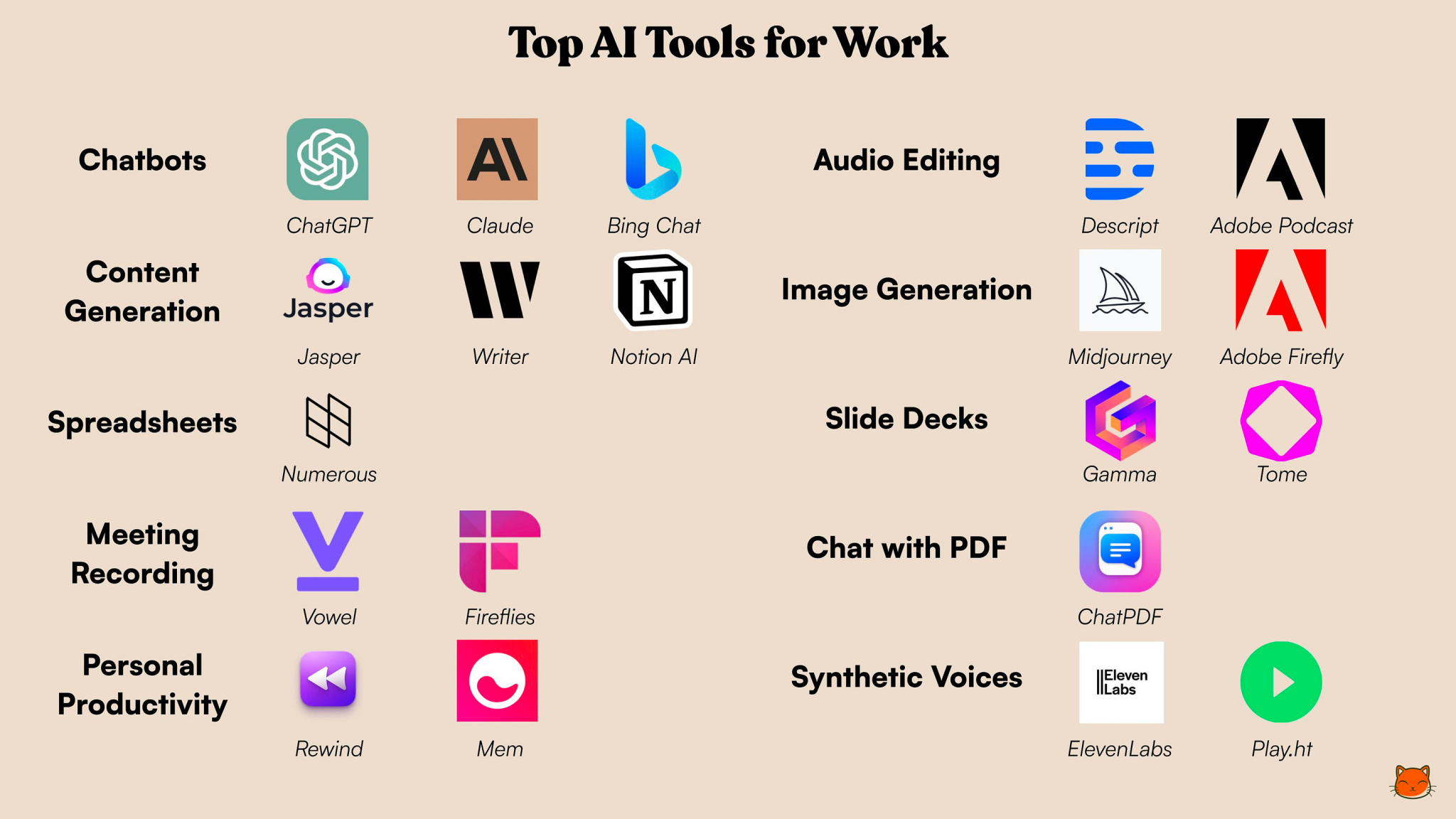
The thoughts above were provoked by trying to get Zapier to make some complex integrations work, discovering in the process that it’s still not quite possible. Perhaps I focus for the time being on simply trying some of these tools, rather than linking existing ones together. Mem in particular looks absolutely fascinating. I was wondering what Generative AI means for personal knowledge management systems like Roam Research. The cumulative knowledge from a regular PKM practice is glaringly obvious to anyone who has sustained this for a period of time. The problem in my experience has always been the inverse relationship between growing it and leveraging the contents; over time I’ve given up and seen it as a garden rather than a library in which the cumulation becomes the sole principles. But I’m now wondering if this is a problem which can be solved by generative AI.
 Mark Carrigan