
I’m currently reading Mike Savage’s The Return of Inequality as I belatedly develop my PhD thesis into a book. His concept of epochal theorising shaped how I approach the work of Anthony Giddens on late modernity which I took as the foil for my thesis. It was encountering thinkers like Bauman, Beck and Giddens which led me from Philosophy to Sociology but much of my early years in the latter involved coming to terms with the many ways in which I felt it was flawed. This is how he defines ‘epochalism’ in the new book:
“Epochalism is a by-product of the modernist temporal ontology that bundles historical periods together through the use of an overarching term, which is then used to give that specific period a coherence. Initially associated with the discipline of history (for example, Erwin Panofsky’s discussion of the “gothic”), in recent decades, this is a widely used perspective in social science, especially sociology (see Savage 2009).”
He distinguishes this from the modernist temporal ontology itself which involves “differentiating complex modern societies (which they research) compared to “traditional” ones (which historians, anthropologists, archaeologists and so forth can analyze)”. This rests on a “conception that modern dynamic societies break from an older, stable, and fixed society”. The past is an inert force which fades away under the influence of a dynamic present. He plausibly suggests we see a continual reiteration of this ontology in ever more ‘hectoring’ forms, insisting that we have entered new times with deep changes. He suggests this temporal ontology is locked into key sociological categories:
“This temporal ontology is locked into key analytical moves in sociology, such as the distinction between structure and agency, which is premised on this ontological temporal difference between past, enduring structures, and a contemporary, contingent agency that breaks from them.”
This is where I depart from his view because it accepts Beck, Bauman and Giddens at face value in how they account for agency. Giddens has the most robust conception of agency out of the three but even then he leaves it oscillating between instrumental future orientated rationality and compulsive behaviours. In contrast a realist conception of agency recognises emergent properties through which history shapes agency, carrying those past influences into present encounters. The individual is (amongst other things) a carrier of history rather than a contingent check upon it.
This matters for how we think about platform society because we encounter radically new socio-technical structures which intersect with the ‘past, enduring structures’ which Savage rightly identifies as the preoccupation of the theorists of late modernity. The social power which a firm like Meta exercises over the globe cannot be straightforwardly understood in terms of any historical precedent, which is why ‘rescuing’ structure from history is a necessary move. But I don’t think this means we can or should dispense with the structure/agency framing because the most fruitful way to understand the socio-technical structures which constitutes ‘platforms’ is by tracing out how differently situated agents interact with them and what this process looks like over time. Particularly because we are leaving the start of a process of changing which is likely to be underway for a significant period of time.
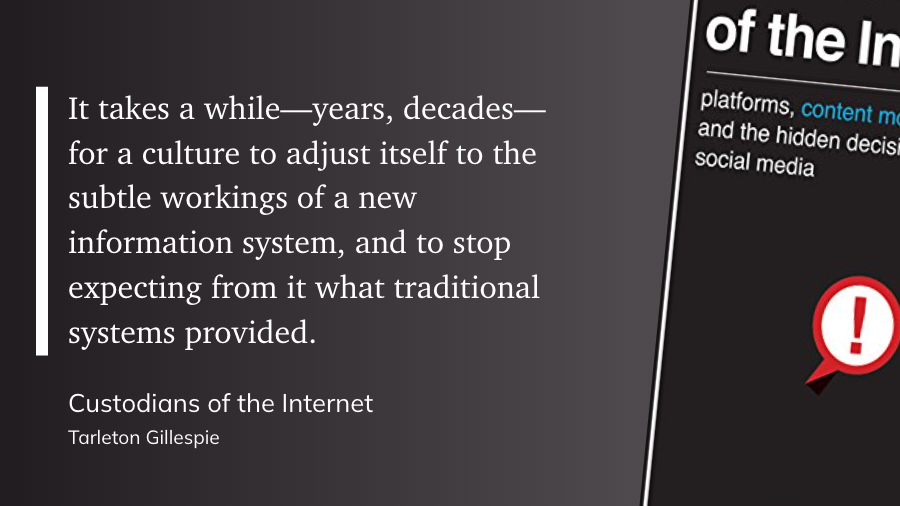
What I term ‘platform and agency’ is a way of thinking through this dynamic in a manner which avoids the parallel risks of platform voluntarism and platform determinism. The point of Becoming Who We Are* is how to ground an approach to the analysis of platforms in a sociologically robust conception of agency which opens out the panoramic frame of reference which I found so compelling in thinkers like Bauman and Giddens but without the analytical deficiencies which Savage (rightly) imputes to them. It’s difficult to do this without reinscribing the epochalism which I’m trying to avoid but I increasingly suspect the best way is to identify how the infrastructure of social life has undergone a transformation which involves some ‘new’ elements but also has characteristics which are ‘old’ and familiar. In this sense we might avoid talking about platform capitalism, digital capitalism or surveillance capitalism etc. I’m not committed to what Savage describes as ‘shoring up’ this temporal ontology but I think there are conceptual elements which it has been contingently related to which I would argue cannot be dispensed without losing a crucial part of sociology’s analytical repertoire.
*Which perhaps I should rename ‘Platform and Agency’ actually, in spite of my attachment to the title of my PhD.
 Mark Carrigan