
There’s lots of insights in this Ofcom study of media use in the UK over the last year. It suggests the pandemic has catalysed a number of changes in how people relate to the internet:
- There’s a possibility that non-access has shrunk significantly (from 11% to 6% from March 2020 to March 2021) but they caution that the enforced move from face-to-face fieldwork to telephone fieldwork means that the surveys can’t support direct comparison.
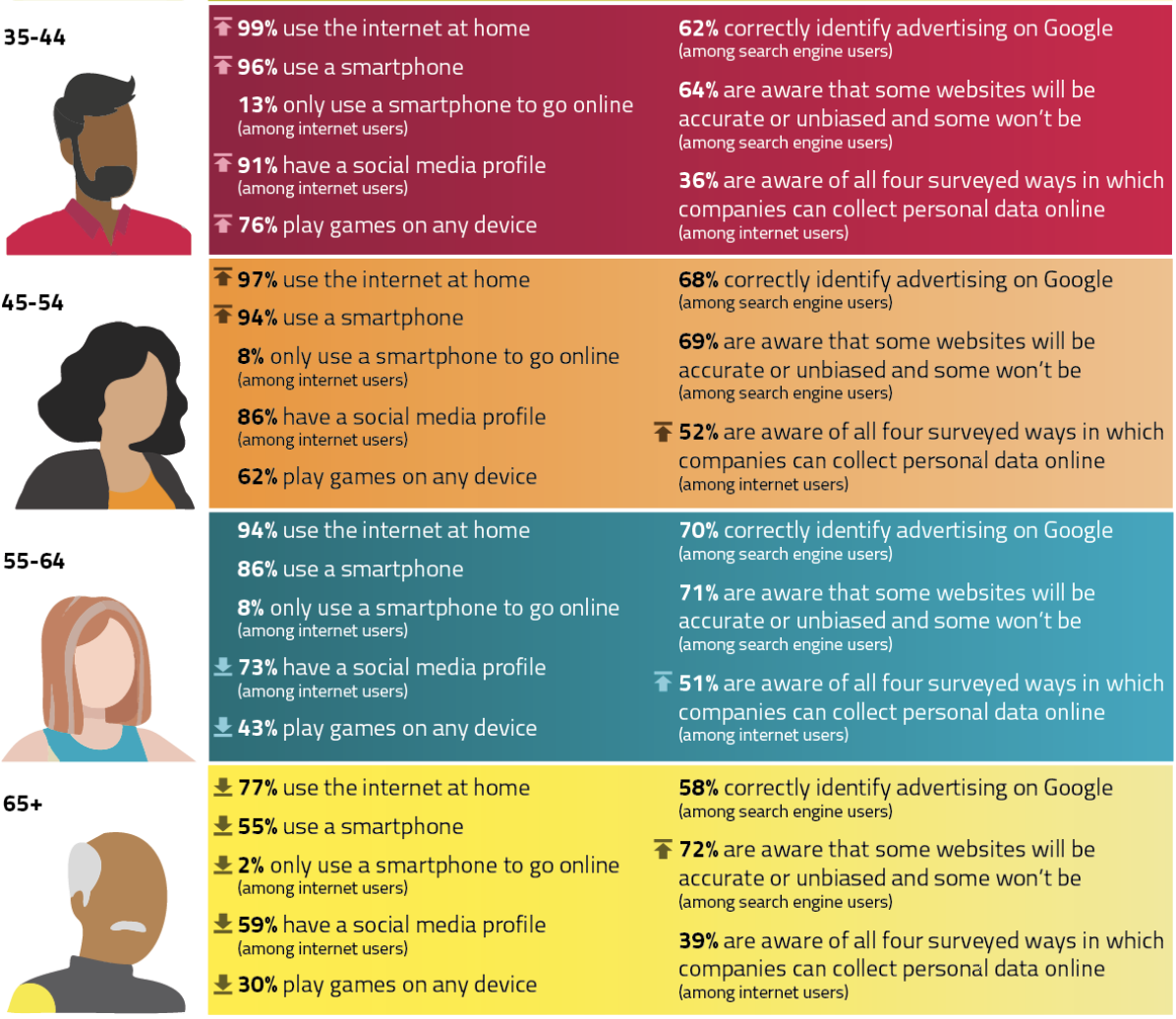
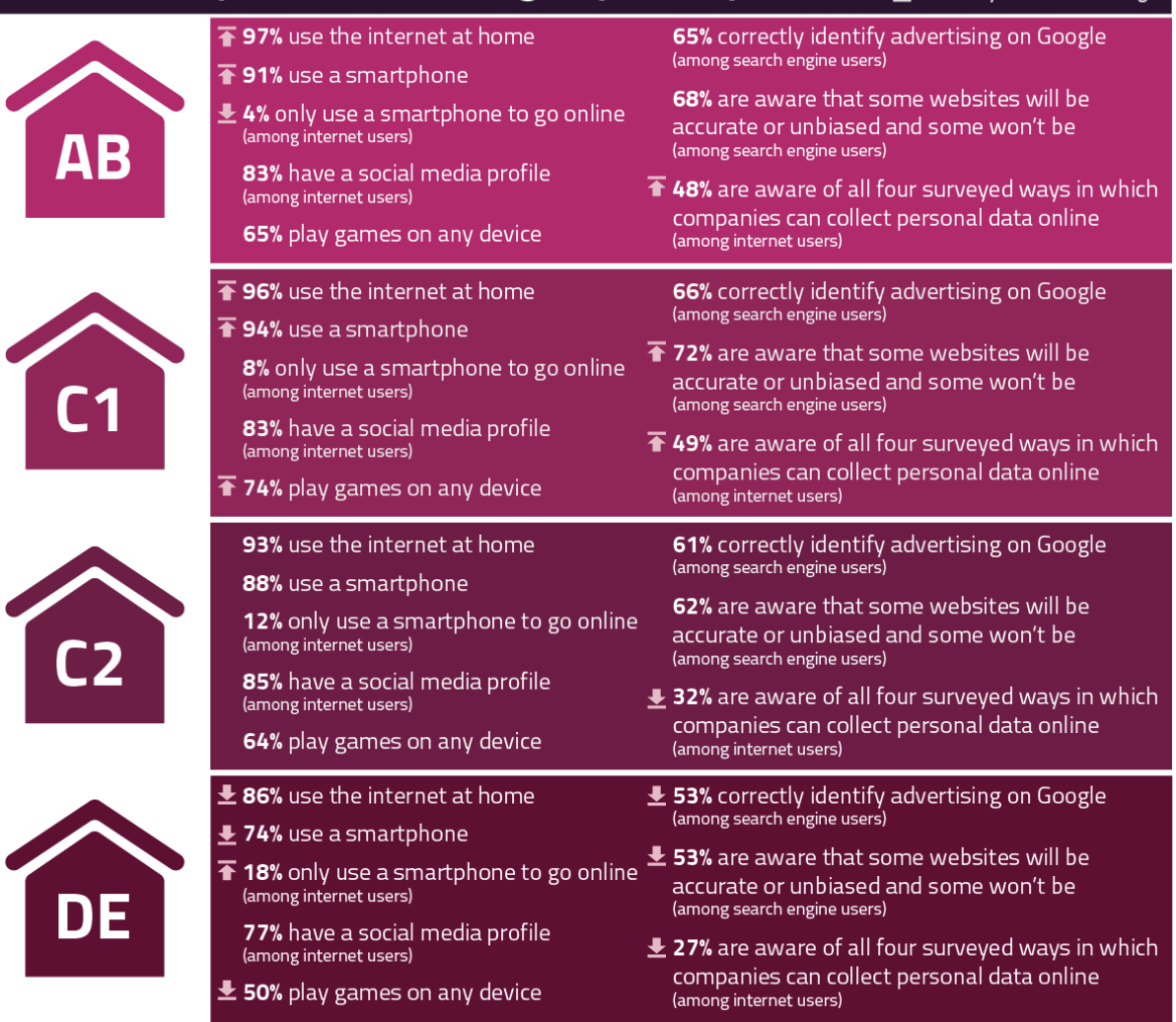
- 10% of users only used a smart phone to go online, more likely within the 25-34 age group and DE economic group, which tended to correlate with narrower internet use. Those who completed fewer activities online tended to have lower than average critical understanding of the online environment. This relates to knowledge about data collection online, confidence in assessing sources and the capacity to recognise advertising.
The class and age data for smartphone penetration is important for making sense of post-pandemic inequalities. If we move into a situation where access is controlled via smart phone passport then there will be systematic exclusions in ways liable to reinforce social inequalities. The 85% across age groups conceals of a lot of variety:
It was interesting to see how digital exclusion is understood by those who are, well, excluded:
Adults who don’t use the internet at home – either due to not having home internet access or
having access but not using it themselves – gave a variety of reasons for not going online in our
Digital Exclusion Survey. The most common reason given was an issue of media literacy; 46% of
those offline stated that the internet was “too complicated” (46%) – either getting connected to it or using it. Other barriers to access included a lack of interest: 42% said “it’s not for people like me, I don’t see the need or I’m not interested”, or a lack of equipment; 37% said they “didn’t have the right equipment” or affordability; 36% believed the internet was “too expensive” – either due to purchasing the equipment needed or the cost of getting connected.The majority (60%) of those who did not use the internet at home had asked someone else to do
something for them online in the past year. Among these proxy users, the most common reason to ask for help was to buy something (57%).
This Pew study found that “15% of home broadband users in the United States say they have had trouble paying for their high-speed internet service during the coronavirus outbreak“, concentrated amongst those with the lowest incomes. This is matched by 15% of mobile users, equally concentrated amongst the lowest income groups. Among those who rely on mobile internet, 27% have struggled to pay for connectivity during the pandemic. 23% of those without broadband cite financial constraints as the reasons for this.
 Mark Carrigan