
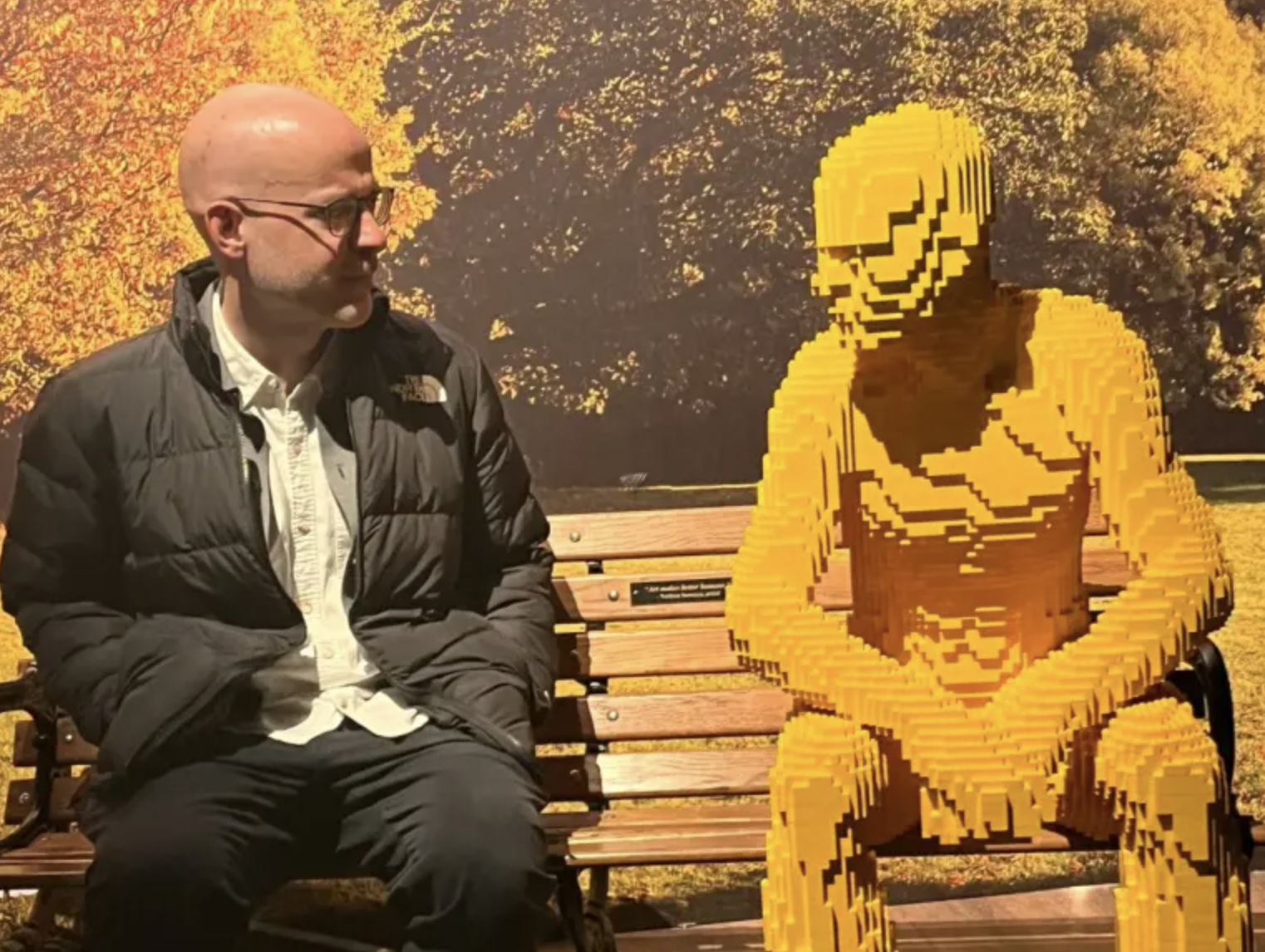
Dr Mark Carrigan FRSA FHEA is a Senior Lecturer in Education at the University of Manchester, where he co-leads the Digital Education Manchester group and serves as an AI Fellow at the Institute for Teaching and Learning. His work centers on three interconnected commitments: developing ontological and epistemological frameworks for understanding Large Language Models (LLMs) beyond current inadequate conceptualisations; examining higher education as a critical site where the social and cultural dynamics of LLMs unfold through practical challenges; and advancing Margaret Archer’s morphogenetic approach as a route to addressing these urgent questions.
Originally trained as a philosopher and sociologist, his work draws on a range of intellectual sources such as philosophical anthropology, digital sociology, platform studies and psychoanalysis. He’s currently training as a group analyst and he’s specifically interested in questions of reliance, dependence and addiction in relation to everyday use of social platforms and LLMs, particularly amongst young men. His long term theoretical project is to incorporate elements of Lacanian psychoanalysis into Archerian realism.
He is the author of the forthcoming Platform and Agency: Becoming Who We Are (Routledge, 2025), which develops a framework for understanding personal transformation in the digital age. His recent work includes Generative AI for Academics (Sage, 2024) and Social Media for Academics (Sage, 2nd edition), alongside eight other books. He co-edited Building the Post-Pandemic University (Edward Elgar, 2023), examining how universities are transforming in response to technological and social disruption.
As joint coordinator of the Critical Realism Network, council member of the International Association for Critical Realism, and trustee of the Centre for Critical Realism, he works to support the diffusion and integrity of critical realist scholarship. He serves on the editorial boards of Civic Sociology, the Journal of Digital Social Research, and Globalisation, Societies and Education.
 Mark Carrigan