
This episode of QAA goes deep on something I’ve noticed over recent years: since I first started following them it seems that urban exploration YouTube has become increasingly reactionary. Indeed in some cases there are obviously far-right tropes entering into these videos:
My sense has always been that there’s a form of the sociological imagination driving this in which viewers follow these creators out of a genuine curiosity about the urban environment and how it is changing. The thoughtful urban explorers touch on a lot of important themes about capitalism, inequality and the urban environment but they do it in an impressionistic, shallow and often banal way. But there are some of them I find very watchable nonetheless. I’ve often thought that there’s a huge opening here for a compelling urban sociologist to build a significant following, meeting the same audience demand in a richer and deeper way. I suspect Les Back for example would be great at this.
In this sense I wonder increasingly if the oversupply problem in digital public engagement (i.e. too much academic content, too small an audience, inadequate delivery mechanisms) could be solved by more targeted genre-based interventions. Indeed it’s suddenly struck me how I don’t think I’ve ever seen a single in situ academic blogger. If anyone can think of an example of this I’d love to see it.
So why are so many of the urban explorers drifting in a reactionary, even far-right, direction. There are a range of potential explanations I can think of:
- Grifting in pursuit of increasingly large reactionary audiences
- The algorithm prioritising reactionary content (is there evidence of YouTube taking an X like turn?)
- These YouTubers being terminally online and being radicalised by other content they are exposed to (including cross-platform discourse)
- The forms of biographical rupture which happen to men in their 20s and 30s driving some of these creators towards radical content
The more interesting aspect of this though would be the nature of the sociological description these YouTubers are engaged in. If you’re setting out to document ‘urban decay’ without any resources for explaining the structural roots of that trend ready-to-hand tropes of urban decay will insert themselves into your narrative. This can’t be pure description. There has to be story telling for compelling content. These stories need mechanisms which drive them. This is where reactionary analysis will fill in the gaps when there’s nothing deeper to draw upon, creating increasingly reactionary interpretations of (impressionistic) observations of urban change. I wonder if this is at least part of the mechanism in some cases.
But I find it hard to watch stuff like this and not think it’s a grift… there’s something so affected about the breathless way in which she purports to be terrified while walking through Whitechapel market (the absence of ‘english faces’) which just seems obviously affected:
I mean there are points in this video which are just obviously bad faith. This Punjabi sign is lingered on in a close up outside Whitechapel station:
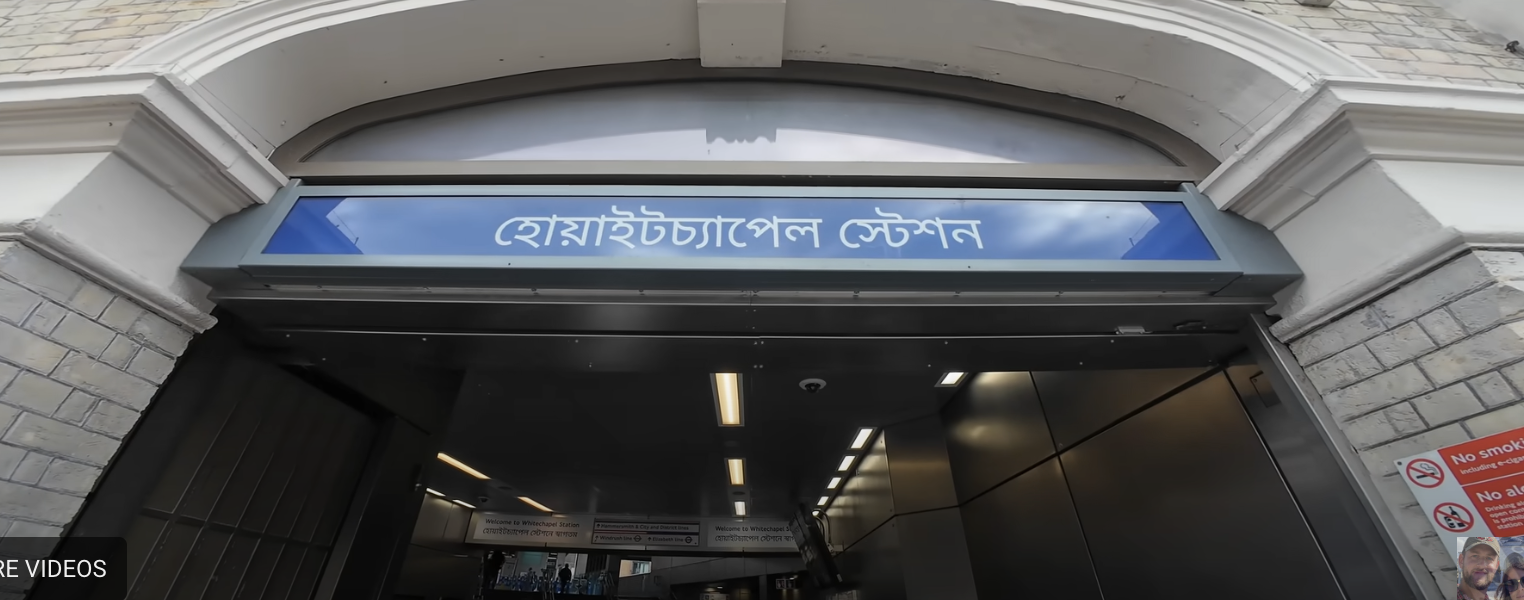
Where this is presumably where they were standing, with the Whitechapel sign next to it (in an area with a 33% Bengali population):
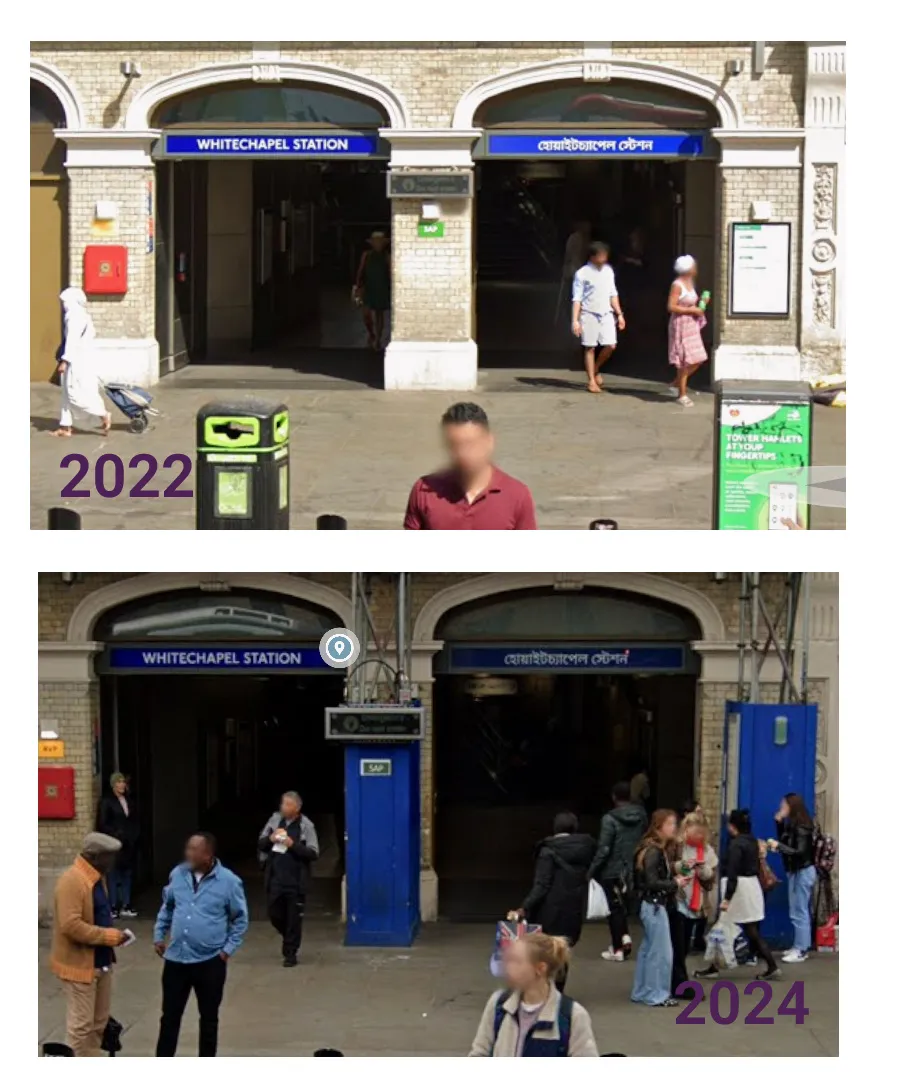
So we can see bad faith deception, broader grifting and genuine radicalisation converging in producing these videos. I do wonder if the superficiality of the videos, a constant attention to surface level impressions articulated in the most superficial way, should be considered a separate factor here. Or rather it’s a dimension in which these other aspects converge to maximal effect to produce this increasingly toxic sludge. There’s a constant invocation of ‘english culture’, ‘traditionally english’, ‘quintessentially english’, ‘proper english’, ‘actually english’ (etc) without any attempt to define or explain what these terms mean. Underneath all the other factors I think there’s a genuine lack of curiosity here about the world around them beyond these surface impressions.

 Mark Carrigan