
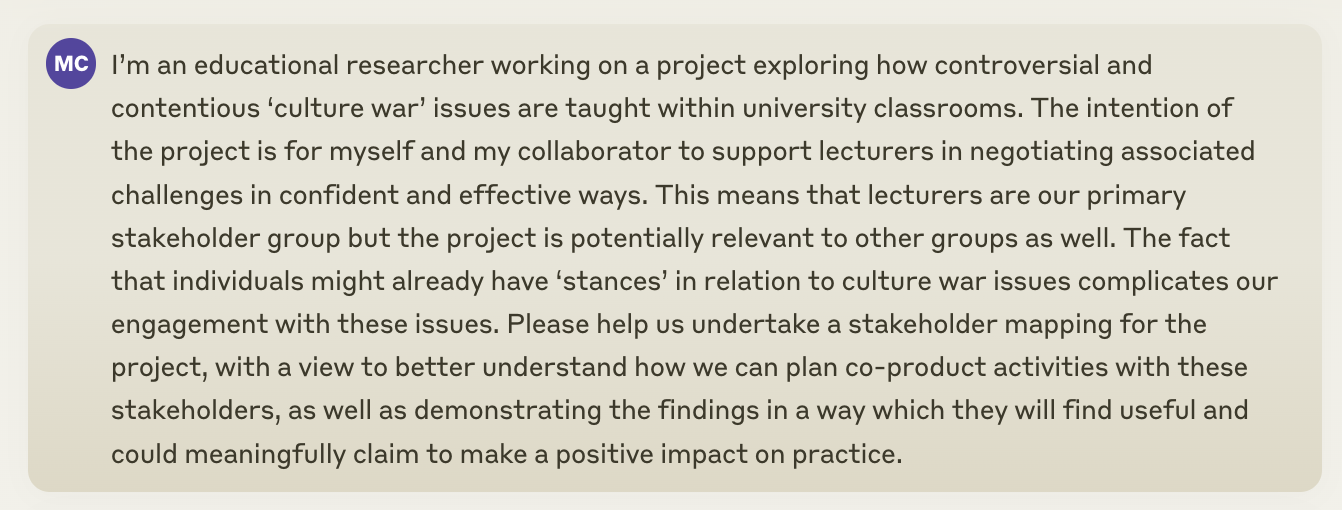
Stakeholder Mapping for 'Culture War Issues in University Classrooms' Project
- Lecturers
- Primary stakeholders and beneficiaries of the research
- Engage through interviews, focus groups, or surveys to understand their experiences, challenges, and needs
- Involve in co-designing resources, guidelines, or training programs to address the identified challenges
- Share findings through workshops, seminars, or online platforms to support their teaching practices
- University Administrators and Policymakers
- Influence institutional policies and guidelines related to teaching controversial topics
- Engage through interviews or focus groups to understand institutional perspectives and constraints
- Share findings and recommendations through policy briefs, presentations, or meetings to inform decision-making processes
- Students
- Directly impacted by how controversial issues are taught in classrooms
- Engage through surveys or focus groups to gather their experiences and perspectives
- Involve in co-designing resources or guidelines to ensure their needs and concerns are addressed
- Share findings through student-friendly formats such as infographics, videos, or social media campaigns
- Academic Unions and Professional Associations
- Represent the interests of lecturers and influence professional standards and practices
- Engage through interviews or focus groups to understand their perspectives and priorities
- Involve in co-designing resources, guidelines, or training programs to ensure alignment with professional standards
- Share findings through newsletters, webinars, or conference presentations to reach a wider audience of educators
- Higher Education Funding Bodies and Policymakers
- Influence funding priorities and policies related to teaching and learning in higher education
- Engage through interviews or focus groups to understand their perspectives and priorities
- Share findings and recommendations through policy briefs, presentations, or meetings to inform funding decisions and policy development
- Media and Public Opinion Shapers
- Influence public discourse and perceptions around controversial issues and higher education
- Engage through interviews or focus groups to understand their perspectives and interests
- Share findings through press releases, op-eds, or media interviews to shape public understanding and debate
Co-Production Activities:
- Establish a project advisory group with representatives from key stakeholder groups to guide the research process and ensure relevance and impact.
- Conduct participatory workshops or design sprints with lecturers, students, and other stakeholders to co-create resources, guidelines, or training programs.
- Organize multi-stakeholder dialogues or roundtable discussions to foster understanding, collaboration, and collective action around the challenges and opportunities identified.
- Develop a online platform or repository for sharing best practices, case studies, and resources co-created with stakeholders.
Demonstrating Findings and Impact:
- Produce a research report or policy brief summarizing key findings, recommendations, and impact stories, tailored to different stakeholder groups.
- Create a series of short videos or podcasts featuring lecturers, students, and other stakeholders sharing their experiences and insights.
- Develop an impact assessment framework to track and evaluate the adoption and effectiveness of co-created resources, guidelines, or training programs over time.
- Organize a high-profile launch event or conference to disseminate findings, showcase co-created outputs, and facilitate networking and collaboration among stakeholders.
- Publish academic papers or articles in relevant journals or media outlets to contribute to the wider scholarly and public discourse on the topic.
By engaging diverse stakeholders throughout the research process, co-creating relevant and useful outputs, and demonstrating tangible impact on teaching practices and student experiences, this project can make a meaningful contribution to navigating the challenges of teaching controversial issues in university classrooms.
Share this:
- Email a link to a friend (Opens in new window) Email
- Share on LinkedIn (Opens in new window) LinkedIn
- Share on Facebook (Opens in new window) Facebook
- Share on WhatsApp (Opens in new window) WhatsApp
- Print (Opens in new window) Print
- Share on Tumblr (Opens in new window) Tumblr
- Share on Reddit (Opens in new window) Reddit
- Share on Telegram (Opens in new window) Telegram
- Share on Mastodon (Opens in new window) Mastodon
- Share on X (Opens in new window) X
 Mark Carrigan