
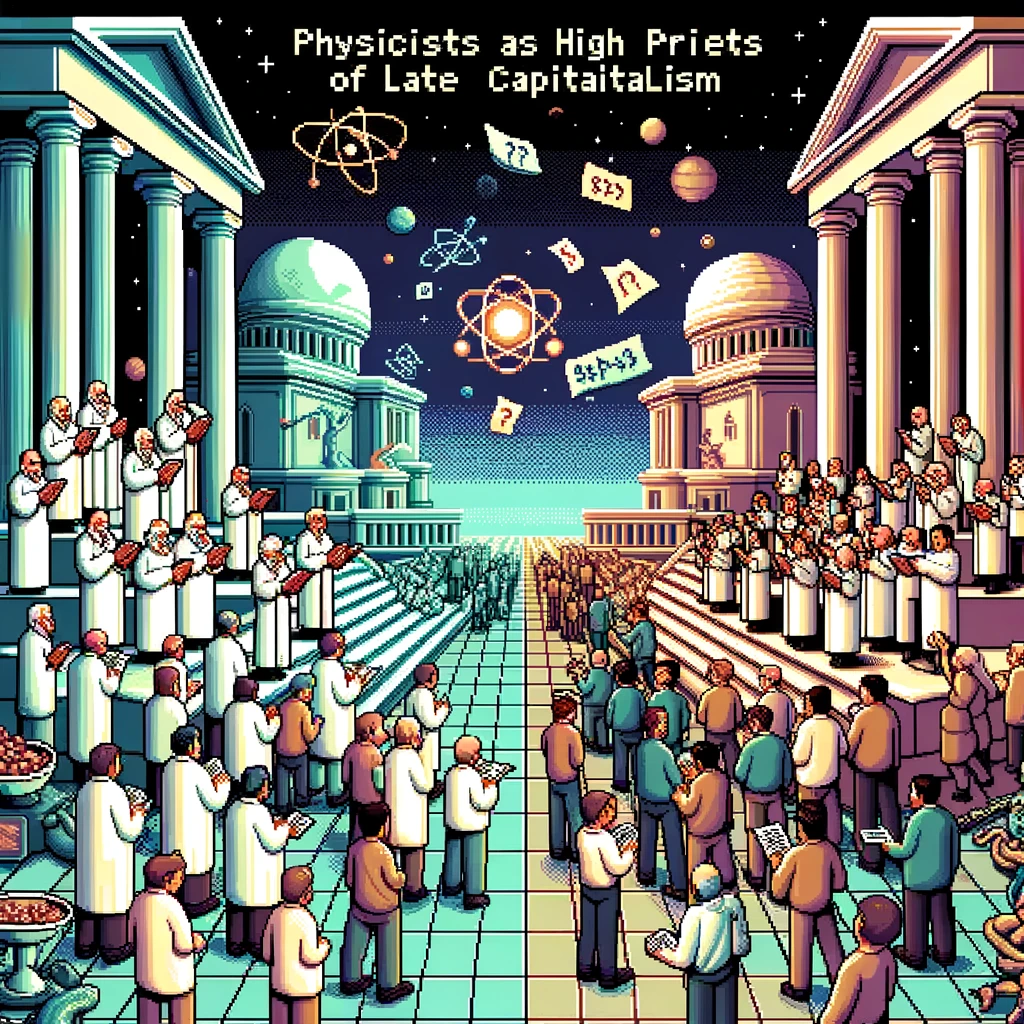
Rorty once remarked that physicists were the high priests of late capitalism*. They were seen as communing with the higher nature of things, with an authority which followed from that. In contrast I suggest behavioural scientists were the lay preachers of late neoliberalism, seen as having some deeper contact with the nature of things than the laity, but most importantly translating this into guidance about how to live. The media were hungry for this guidance, easily expressed in sound bites which revealed deeper truths of our nature which we could live by.

The problem is we are now coming to understand how much malpractice, ranging from light p-hacking through to outright fraud, drove this body of research. The research highlighted in this article came from Brian Wansink, who Cornell found guilty of malpractice and removed from all teaching and research position. Yet the bromides about how to flourish, packaged up in their science-y vibes, remain lodged in the public sphere. This QAnon Anonymous podcast (full version is £ but it’s worth subscribing for) covers the fascinating story of Wansink very effectively:
As they say towards the end of the podcast, this is science as content creation. The incentives Wansink encountered, which in high-end business schools include hugely lucrative consultancy gigs, closely resembled those of a YouTuber. Get as much high-engagement content as possible from as little work as possible, packing up what you do in a way intended to maximise effects. The process is not important, the output is. In this we see I think a condensed expression of incentives all academics are now subject to, to varying degrees. But if we embrace those incentives fully, we could end up in some dark places. I’m really concerned about what widespread GAI use will do to this picture in terms of productivity and the falsification of data.
As this brilliant New Yorker piece documents, Wansink was not exceptional. At what point do we move beyond ‘a few bad apples’ and suggest that something is fundamentally amiss about the apparatus of contemporary behavioural science? I’m not qualified to make that judgement, though I’m realising this is something I want to look much more closely at it. But I’m particularly interested in understanding the contemporary influence of behavioural science through this lens. What does it mean for its normative influence on public culture if malpractice is as widespread as it seems? In a discussion with Milan Sturmer recently, we hit upon the speculative possibility that virtue ethics could dislodge behavioural science from this place within public culture. It has been filling a void for normative guidance, relying on its science-y clothing to occupy that role. But we are now seeing, at risk of sounding like Zizek, there is nothing under its robe. So do we replace the position with another intellectual priesthood, or do we deflate the position in order to examine the normative vacuum in public culture.
*If anyone knows where he said that, please tell me! I read it years ago, I’m certain the remark is there somewhere but I can’t find it.
 Mark Carrigan