
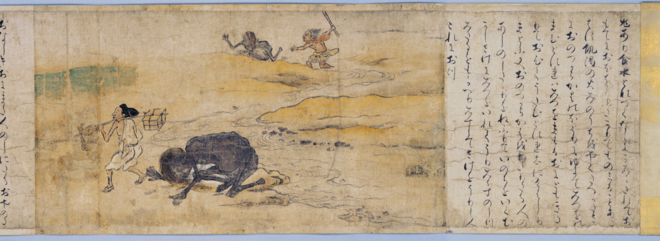
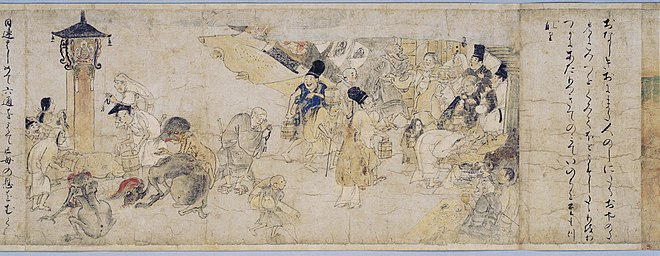
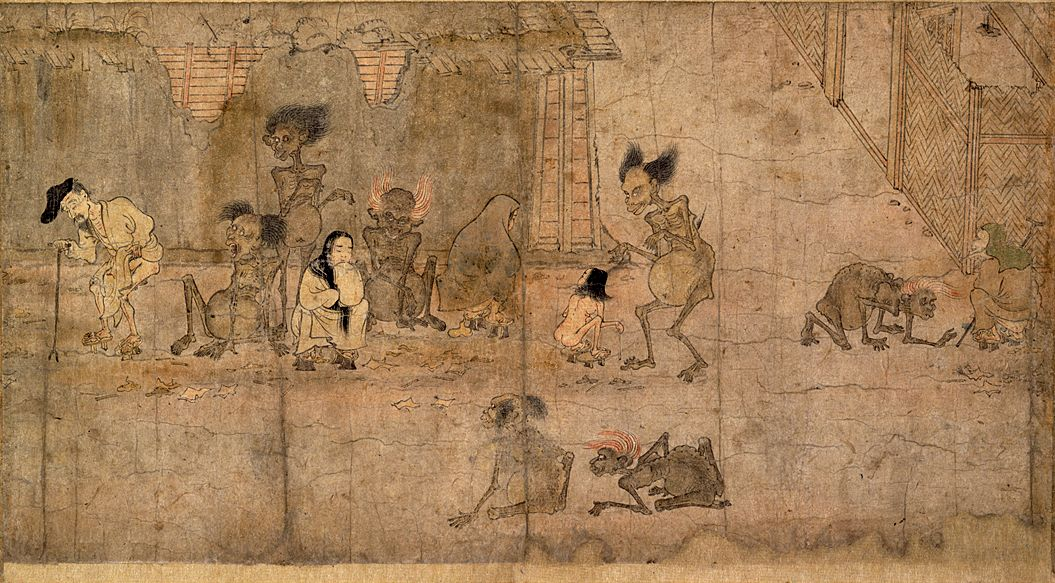
The Hungry Ghosts are probably the most vividly drawn metaphors in the Wheel of Life. Phantom-like creatures with withered limbs, grossly bloated bellies, and long, thin necks, the Hungry Ghosts in many ways represent a fusion of rage and desire. Tormented by unfulfilled cravings and insatiably demanding of impossible satisfactions, the Hungry Ghosts are searching for gratification for old unfulfilled needs whose time has passed. They are beings who have uncovered a terrible emptiness within themselves, who cannot see the impossibility of correcting something that has already happened. Their ghostlike state represents their attachment to the past. In addition, these beings, while impossibly hungry and thirsty, cannot drink or eat without causing themselves terrible pain or indigestion. Their very attempts to satisfy themselves cause more pain. Their long, thin throats are so narrow and raw that swallowing produces unbearable burning and irritation. Their boated bellies are in turn unable to digest nourishment; attempts at gratification only yield a more intense hunger and craving. These are beings who cannot take in a present-day, albeit transitory, satisfaction. They remain obsessed with the fantasy of achieving complete release from the pain of their past and are stubbornly unaware that their desire is a fantasy. It is this knowledge that such people are estranged from, for their fantasy must be owned as fantasy. The Hungry Ghosts must come in contact with the ghostlike nature of their own longings.
Thoughts Without a Thinker, Mark Epstein, Pg 28-29
 Mark Carrigan