
Raiding the inarticulate since 2010

accelerated academy acceleration agency AI Algorithmic Authoritarianism and Digital Repression archer Archive Archiving artificial intelligence automation Becoming Who We Are Between Post-Capitalism and Techno-Fascism big data blogging capitalism ChatGPT claude Cognitive Triage: Practice, Culture and Strategies Communicative Escalation and Cultural Abundance: How Do We Cope? Corporate Culture, Elites and Their Self-Understandings craft creativity critical realism data science Defensive Elites Digital Capitalism and Digital Social Science Digital Distraction, Personal Agency and The Reflexive Imperative Digital Elections, Party Politics and Diplomacy digital elites Digital Inequalities Digital Social Science Digital Sociology digital sociology Digital Universities elites Fragile Movements and Their Politics Cultures generative AI higher education Interested labour Lacan Listening LLMs margaret archer Organising personal morphogenesis Philosophy of Technology platform capitalism platforms Post-Democracy, Depoliticisation and Technocracy post-truth psychoanalysis public engagement public sociology publishing Reading realism reflexivity scholarship sexuality Shadow Mobilization, Astroturfing and Manipulation Social Media Social Media for Academics social media for academics social ontology social theory sociology technology The Content Ecosystem The Intensification of Work theory The Political Economy of Digital Capitalism The Technological History of Digital Capitalism Thinking trump twitter Uncategorized work writing zizek

Escaping the crystallised pattern of our personal system

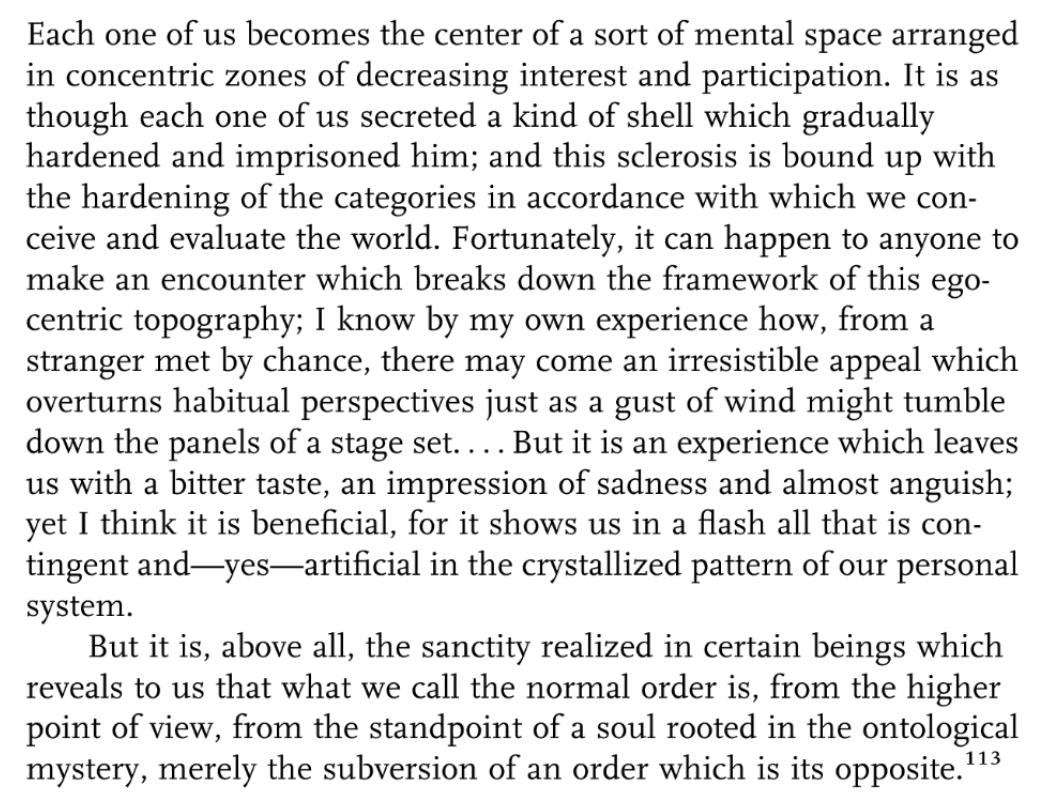
I’m struggling to find an electronic copy of the original source so I think I need an (increasingly rare) trip to the library to track down this beautiful text by Gabriel Marcel, cited here in Michael Murphy’s A Theology of Criticism:
It reminds me of how Roberto Unger describes the ‘small deaths’ which imperceptibly take place as we get older:

He faces the burdens of belittlement a third time as he grows older, and settles into an existence that he has embraced, or that has been forced upon him. A carapace of routine, of compromise, of silent surrenders, of half-term solutions, and of diminished consciousness begins to form around him. He turns himself over to the rigidified version of the self: the character. He begins to die small deaths, many times over. He fails to die only once, which is what he would desire if he were able fully to recognize the value of life. This third encounter with belittlement reveals belittlement for what it in fact is: death by installments.