
Raiding the inarticulate since 2010

accelerated academy acceleration agency AI Algorithmic Authoritarianism and Digital Repression archer Archive Archiving artificial intelligence automation Becoming Who We Are Between Post-Capitalism and Techno-Fascism big data blogging capitalism ChatGPT claude Cognitive Triage: Practice, Culture and Strategies Communicative Escalation and Cultural Abundance: How Do We Cope? Corporate Culture, Elites and Their Self-Understandings craft creativity critical realism data science Defensive Elites Digital Capitalism and Digital Social Science Digital Distraction, Personal Agency and The Reflexive Imperative Digital Elections, Party Politics and Diplomacy digital elites Digital Inequalities Digital Social Science Digital Sociology digital sociology Digital Universities elites Fragile Movements and Their Politics Cultures generative AI higher education Interested labour Lacan Listening LLMs margaret archer Organising personal morphogenesis Philosophy of Technology platform capitalism platforms populism Post-Democracy, Depoliticisation and Technocracy post-truth psychoanalysis public engagement public sociology publishing Reading realism reflexivity scholarship sexuality Shadow Mobilization, Astroturfing and Manipulation Social Media Social Media for Academics social media for academics social ontology social theory sociology technology The Content Ecosystem The Intensification of Work The Political Economy of Digital Capitalism The Technological History of Digital Capitalism Thinking trump twitter Uncategorized work writing zizek

the war on radicalisation and where it might lead

In this chilling interview, Wesley Clark, former Supreme Allied Commander Europe of Nato and one time favourite of Michael Moore for the Democratic Presidential nomination, rather aggressively floats the idea of interning those who are disloyal to the United States for the duration of the ‘war on terror’:

If we look at this in terms of the Overton window, we’re seeing a disturbing movement from ‘unthinkable’ to ‘radical’ of the idea that compliance with the law is sufficient to avoid harassment by the state. Though offering less specifics, David Cameron put forward a similar principle after the election:
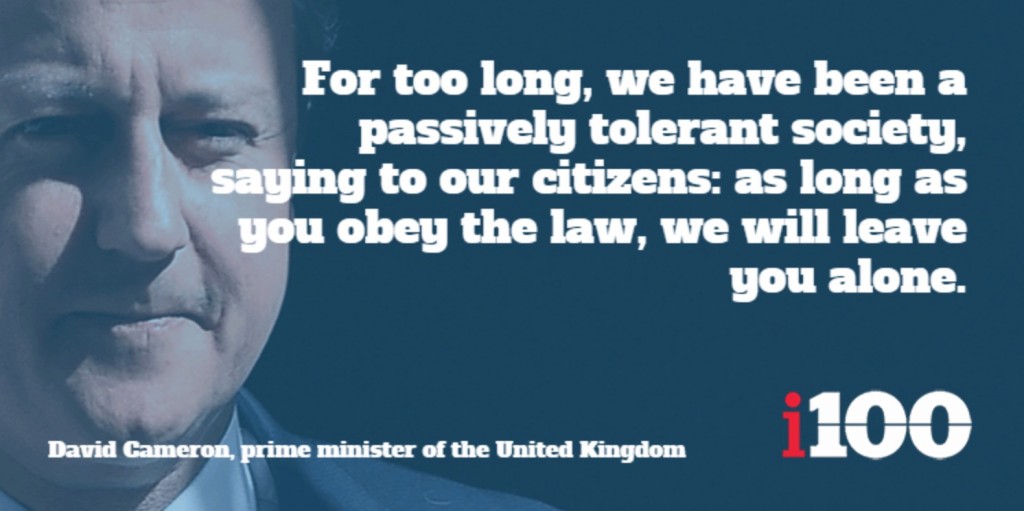
David-Cameron

To be deemed ‘susceptible to radicalisation’ increasingly entails a state of exemption. As Wesley Clark puts it, it’s both the right and the obligation of governments to segregate citizens who fall into this category for the ‘duration of the conflict’. But how does one come to be placed in the category? It strikes me as potentially open-ended because it’s defined as a propensity towards being drawn into ‘extremism’, itself understood in opposition to values which are nebulous at best: “vocal or active opposition to fundamental British values, including democracy, the rule of law, individual liberty and mutual respect and tolerance of different faiths and beliefs”. The exact objects of the war on radicalisation are endlessly elastic because the terms upon which their meaning depends are always amenable to situational reinterpretation. Something extremely worrying is happening here.