
I was introduced to this Rilke poem via a book by Peter Sloterdijk:
We cannot know his legendary head
with eyes like ripening fruit. And yet his torso
is still suffused with brilliance from inside,
like a lamp, in which his gaze, now turned to low,gleams in all its power. Otherwise
the curved breast could not dazzle you so, nor could
a smile run through the placid hips and thighs
to that dark center where procreation flared.Otherwise this stone would seem defaced
beneath the translucent cascade of the shoulders
and would not glisten like a wild beast’s fur:would not, from all the borders of itself,
burst like a star: for here there is no place
that does not see you. You must change your life
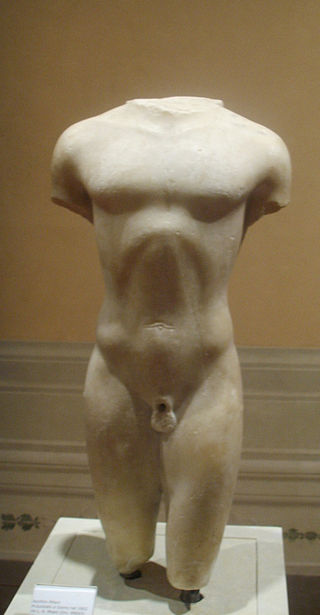
He takes the closing line as the title for his book. I’ve struggled somewhat with it. I don’t find Sloterdijk to be a clear or careful writer. It’s also a translated work which I’ve been reading in fragments. But his interpretation of Rilke’s words has stuck with me:
‘You must change your life!’ – this is the imperative that exceeds the options of hypothetical and categorical. It is the absolute imperative – the quintessential metanoetic command. It provides the keyword for revolution in the second person singular. It defines life as a slope from its higher to its lower forms. I am already living, but something is telling me with unchallengeable authority: you are not living properly.
This authority touches on a subtle insufficiency within me that is older and freer than sin; it is my innermost not-yet. In my most conscious moment, I am affected by the absolute objection to my status quo: my change is the one thing that is necessary. If you do indeed subsequently change your life, what you are doing is no different from what you desire with your whole will as soon as you feel how a vertical tension that is valid for you unhinges your life.
This is a topic I’m drawn towards. Those moments in which we confront something outside of ourselves that reflects back upon us. Reminders of the ‘subtle insufficiency’ which might otherwise remain at the back of our minds, lost behind the minutiae of the quotidian. In confrontation with them, we recognize our own possibility and the challenge that we might become more than we currently are. Sloterdijk offers a detailed theory of ‘vertical tensions’ to make sense of how these qualitative distinctions of worth are embedded within cultural forms: exactly what we take ‘more’ to be is culturally variable but there is always ‘more’ and ‘less’, ‘better’ and ‘worse’.
I think this is another example of what Ian Craib describes as the importance of disappointment: “what happens, what we feel, when something we expect, intend, or hope for or desire does not materialise”. If Craib is right that we often retreat from disappointment in the late modern world, reflecting “a desire to get out of the mess of life”, we also miss out on these moments in which we confront ‘vertical tensions’. The discomfort generated by a vertical tension, in which we recognize a gnawing sense of ‘subtle insufficiency’, might come to be seen as pathological: what should be a spur to self-transcendence instead becomes seen as a threat to self-esteem.
 Mark Carrigan