
This is interesting from the FT. Essentially I take this to be saying that ‘platform city‘ effects have entered into a feed back loop with foreign direct investment:
Sam Dumitriu, head of policy at think-tank Britain Remade, explains that these developments were deliberately focused on Manchester’s city centre to reap the benefits of agglomeration. “Firms are more productive when people, homes, other businesses and amenities are close together,” he says, adding that between 2001 and 2023, 23 per cent of Greater Manchester’s population growth happened on just 2 per cent of its land mass.
The emphasis on attracting investment, clustering and connectivity has supported creative destruction. Old industrial zones have been converted into business space, drawing in higher value-added sectors including professional services, technology and media. (For measure, from 2015 to 2024 the city’s office space grew at a faster rate than that of London, Paris and Barcelona.)
Declining manufacturing employment has been more than offset by jobs in the knowledge-intensive business services sector, which have risen faster in Manchester than in any other UK city region outside of London since 2008. The arrival of new enterprise has, in turn, attracted foreign direct investment, boosted local graduate retention and supported greater start-up activity, creating a virtuous cycle that few UK cities have been able to replicate.
https://www.ft.com/content/87e4c899-5055-4a4d-841b-c7e9b0c319a6?syn-25a6b1a6=1
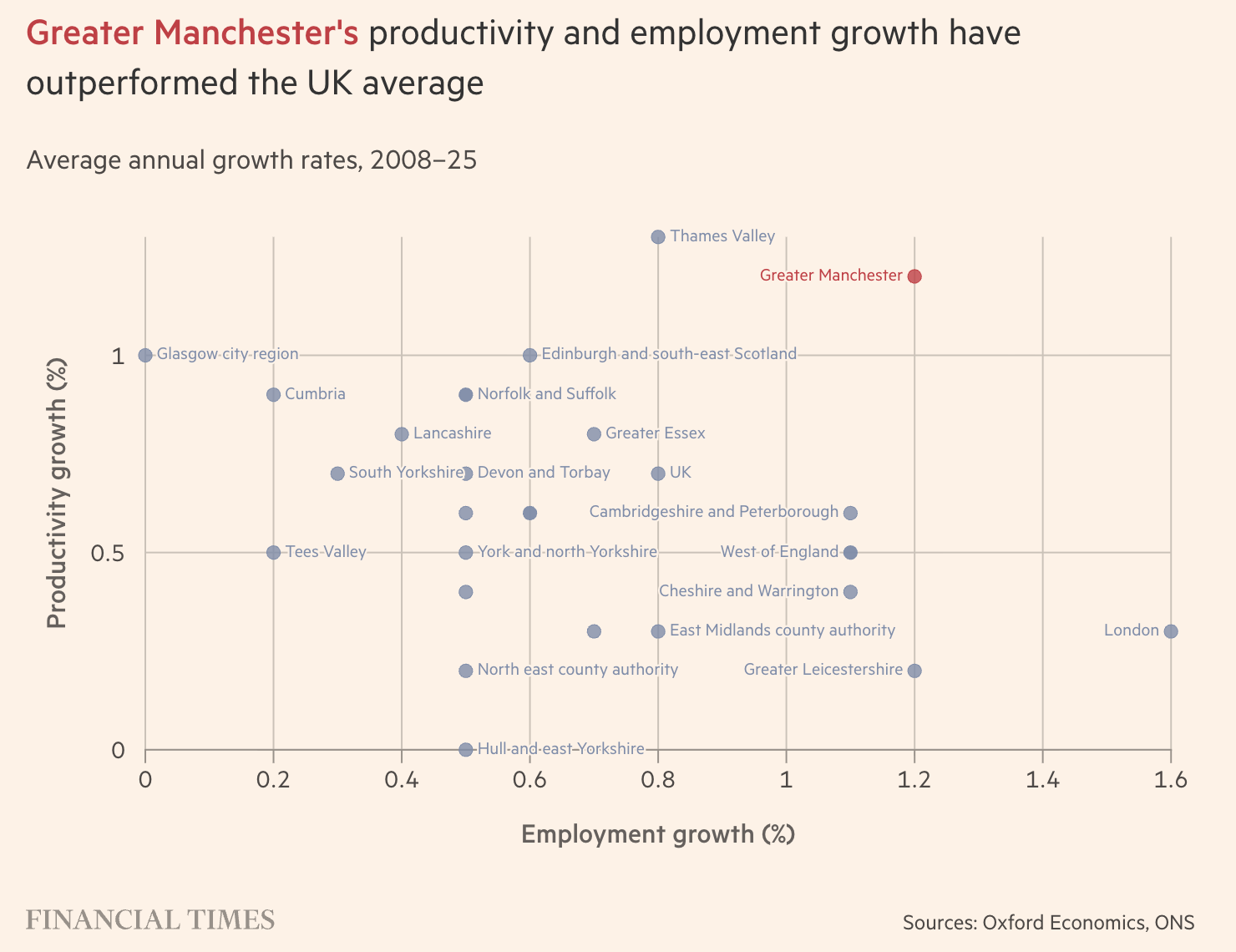
It’s interesting that productivity growth in Cambridgeshire is so much lower than Manchester! It’s hard not to immediately wonder about the role of transportation in explaining the difference.
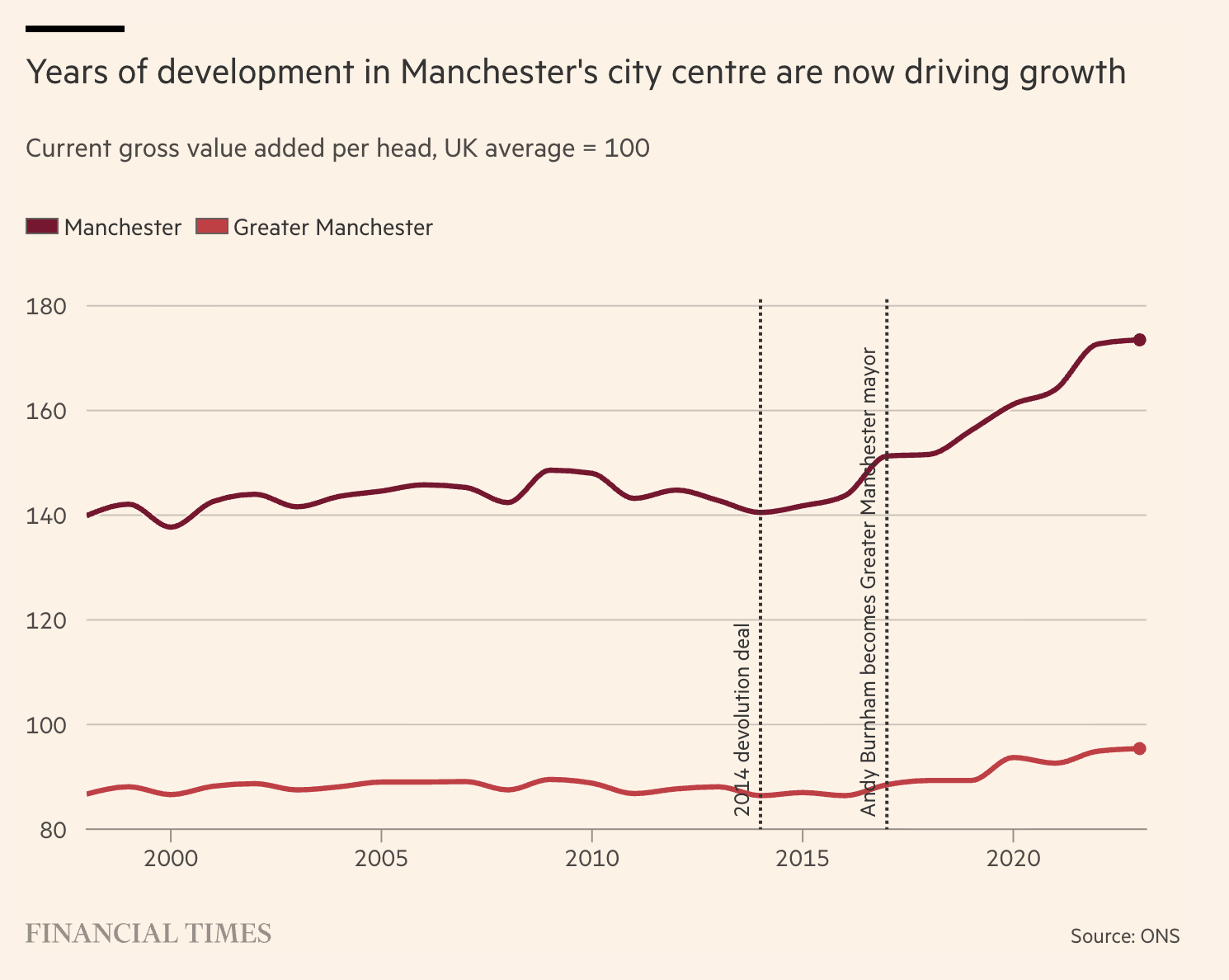
Indeed, standards of living vary widely across the city region and housing developments have mainly targeted well-heeled professionals. But by prioritising the private sector, Manchester now has a larger potential tax base, stronger jobs market and clout with Westminster and investors — all vital assets to help tackle inequalities in the future.

