
I had the unpleasant experience recently of getting peer reviews directed to me for my (three years deceased) friend and mentor for whom I’m a literary executor. When I complained to the journal I discovered it’s a new automated database which Springer are using which I can opt of. When I went to opt out I discovered this is a frequent enough experience that it’s actually listed as one of the options in the drop down:
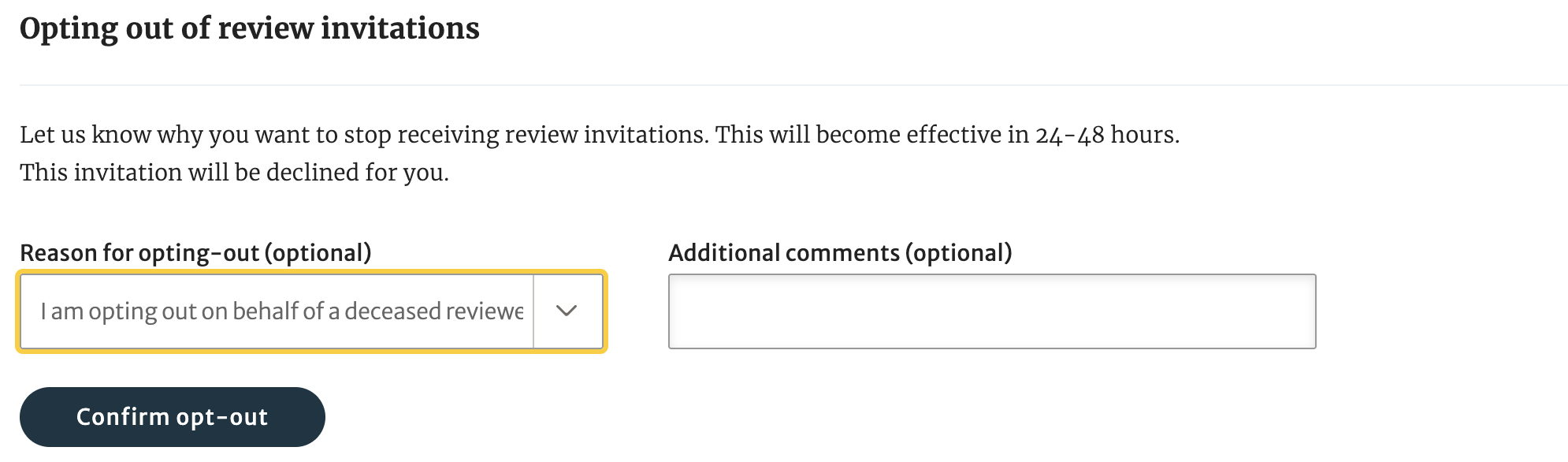
This is a bit grim, no? It would be such an easy exercise to clean the data by looking at prima facie inconsistencies between reviewer name and the contact details. Indeed it’s a textbook example of something Claude Code or Codex could do without any technical skill being required. It wouldn’t catch it all but it would be such an easy triage to perform in order to mark some records as needed verificaton. Yet they choose not to do it and instead rely on manual opt outs which does rather capture my worst feelings about commercial publishers. This is the system itself:
Springer Nature’s mission is to make publishing research a simple and rewarding experience. That’s why we introduced Snapp, the Springer Nature Article Processing Platform, to enable research to be published as efficiently as possible.
We created Snapp to be intuitive and simple to use, and it’s designed to better meet the needs of the research community – our authors, editors, and reviewers.
Snapp is built in-house by Springer Nature, so it continuously evolves to respond to researcher needs. We’re also using user feedback to guide its development and release regular updates and new features – visit the What’s new pages to find out more.

