
Raiding the inarticulate since 2010

accelerated academy acceleration agency AI Algorithmic Authoritarianism and Digital Repression archer Archive Archiving artificial intelligence automation Becoming Who We Are Between Post-Capitalism and Techno-Fascism big data blogging capitalism ChatGPT claude Cognitive Triage: Practice, Culture and Strategies Communicative Escalation and Cultural Abundance: How Do We Cope? Corporate Culture, Elites and Their Self-Understandings craft creativity critical realism data science Defensive Elites Digital Capitalism and Digital Social Science Digital Distraction, Personal Agency and The Reflexive Imperative Digital Elections, Party Politics and Diplomacy digital elites Digital Inequalities Digital Social Science Digital Sociology digital sociology Digital Universities elites Fragile Movements and Their Politics Cultures generative AI higher education Interested labour Lacan Listening LLMs margaret archer Organising personal morphogenesis Philosophy of Technology platform capitalism platforms Post-Democracy, Depoliticisation and Technocracy post-truth psychoanalysis public engagement public sociology publishing Reading realism reflexivity scholarship sexuality Shadow Mobilization, Astroturfing and Manipulation Social Media Social Media for Academics social media for academics social ontology social theory sociology technology The Content Ecosystem The Intensification of Work theory The Political Economy of Digital Capitalism The Technological History of Digital Capitalism Thinking trump twitter Uncategorized work writing zizek

Why you should avoid publishing with MDPI

While they still have the trappings of a legitimate business model the underlying fundamentals of what they do as a publisher are clear. Their acceptance rates are pushed ever higher in order to maximise income from ever increasing author fees for publication. They also rely on special collections to continually increase output, while avoiding the safeguard which stable editorial collectives provide against continually pushing for greater profit. These two graphics are from an excellent report about the company here:
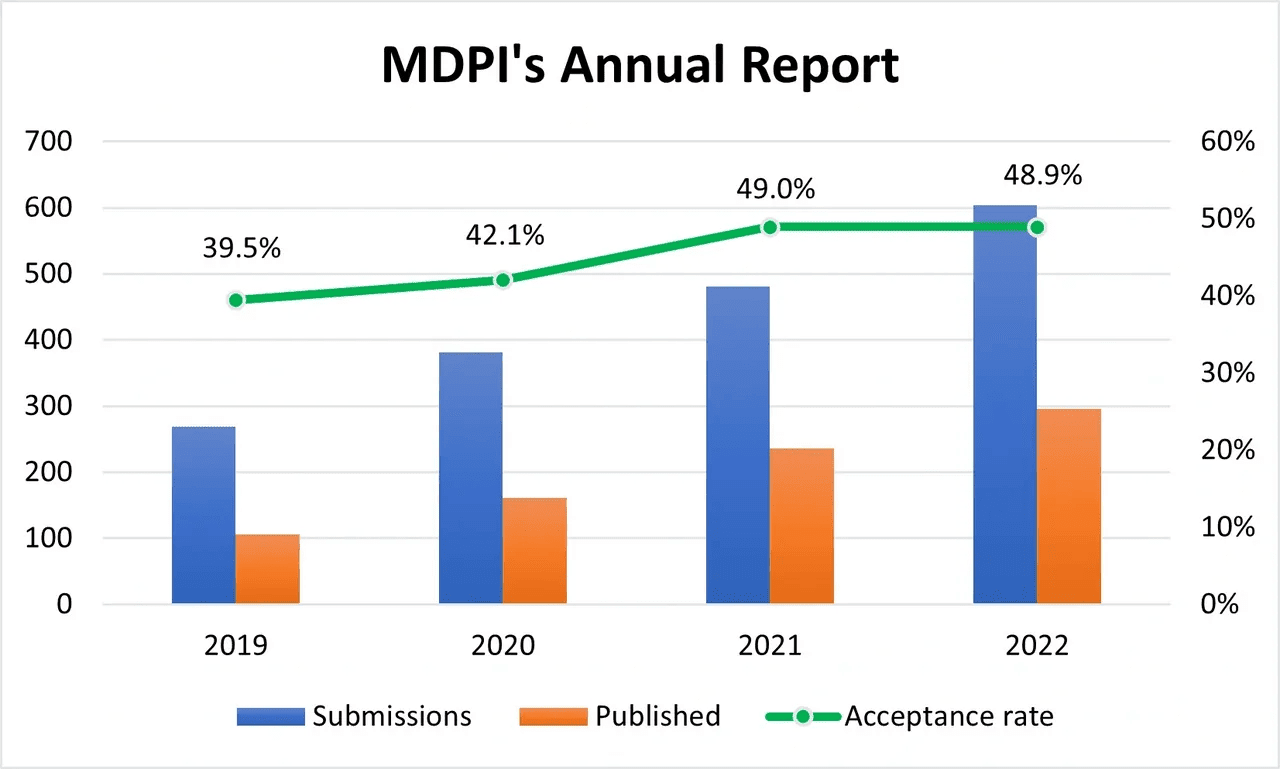
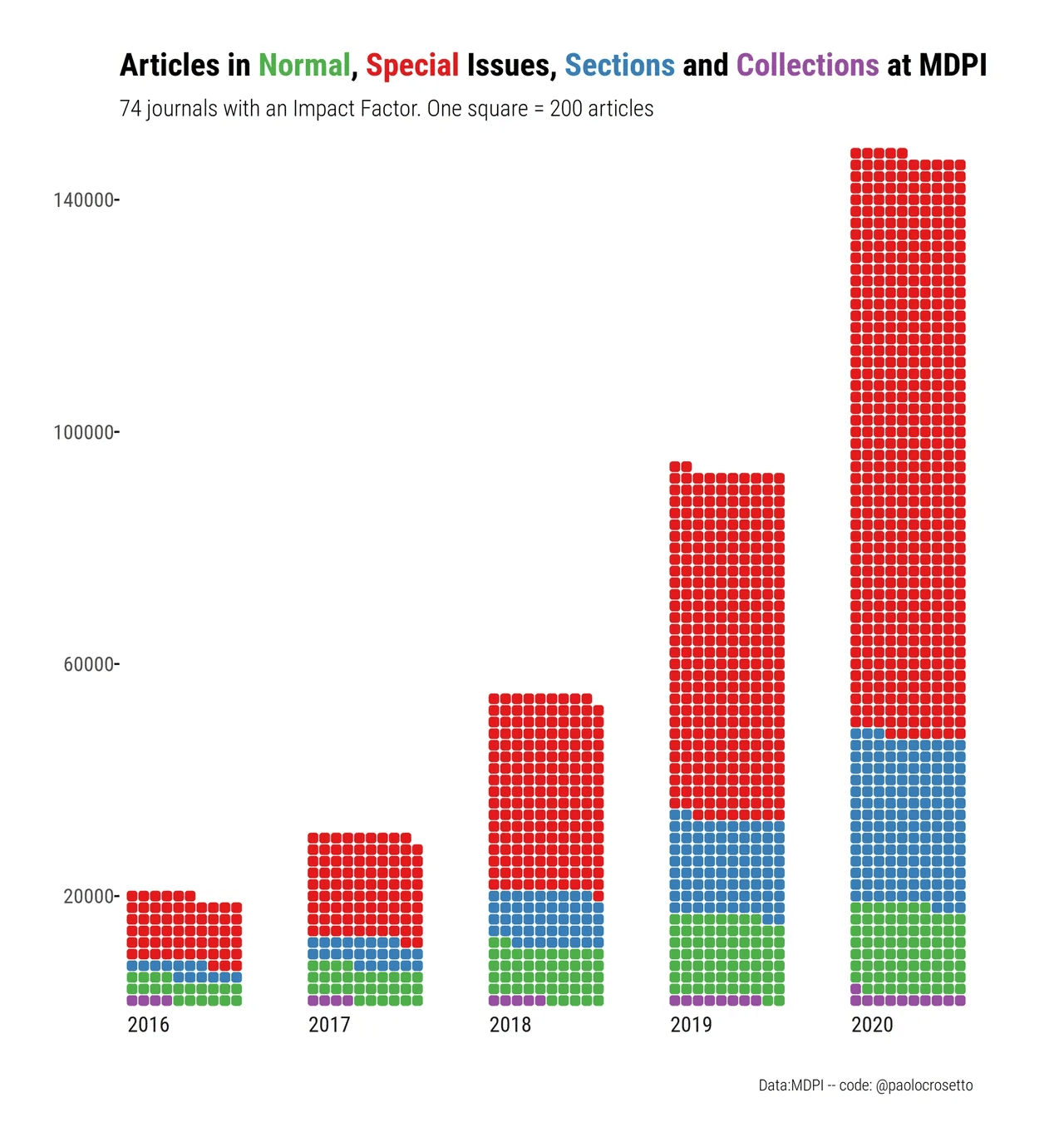
This isn’t an accusation of malign intent to MDPI (or their editors) because there’s a fundamental problem with the incentive structure entailed by APCs and open-access problem. I do think MDPI have followed the logic of those incentives further than the publishers I would see as legitimate and I think it’s important every academic understands the pressures of the business model here. The knowledge system is already in a terrible state. Don’t support its further deterioration by publishing with what is almost, though not quite, a predatory publisher.